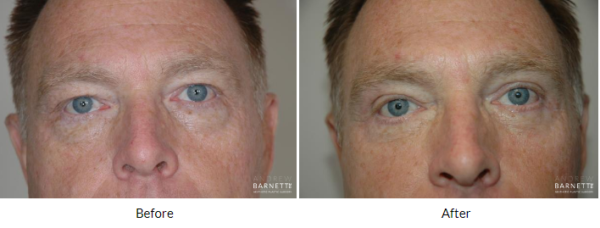
: Before & After Photos

Surgeries performed by certified American Board of Plastic Surgery renowned surgeon Dr. Andrew Barnett, San Francisco, CA

Patient 1

Breast Implant Associated ALCL (BIA-ALCL) is a form of lymphoma seen in women who have breast implants. ALCL is not breast cancer, it is a rare type of cancer of the immune cells.  While all women with breast implants, or considering breast implants, should know about BIA-ALCL, it is extremely rare, very treatable, and should not be a major source of concern.

Below are a series of frequently asked questions and answers.  Plastic Surgery professional organizations recommend that if you have any concerns or questions that you return to the original surgeon who performed the breast implant surgery, or to another board certified plastic surgeon.

You may find a list of board certified plastic surgeons at find.plasticsurgery.org

Q: What happens if I get BIA-ALCL?

A: It’s very unlikely that you’ll develop BIA-ALCL as it’s quite rare, so first, don’t worry! When identified early, the problem is usually very localized, and treatment is limited to removing the tissue immediately around the breast implant, called the implant capsule. While this is a surgical procedure, it usually does not impact the breast tissue, and with replacement of the breast implant, there is usually limited to no change in the appearance of the breast. Monitoring by a cancer specialist, is necessary, but frequently, no additional surgical treatment, radiation, or chemotherapy will be required.

Q: What is the risk of developing BIA-ALCL if I have breast implants?

A: The most recent count of reported cases worldwide is 457. There are unquestionably cases that have not been reported, but based on careful analysis, the risk has been calculated as somewhere between 1 in 2,800 and 1 in 82,000 for women with breast implants. But there is an important point to understand. Based on current knowledge and careful review of all the reported cases, there is a clear dividing line: To date, there have been no confirmed cases of BIA-ALCL in women with smooth surfaced implants. Textured implants, implants that have a surface that feels like sandpaper, are the only type of implants associated with BIA-ALCL. And it also appears that the rougher the texturing, the greater the risk. So, depending on your implant texture, the risks change. Smooth implants appear to have zero (or very close to zero) risk. Lightly textured implants – 1:82,000, Moderate textured implants – 1:3,200, and Aggressively textured (Polyurethane coated) implants – 1:2,800.

In many countries, sale of textured implants is no longer allowed. The FDA has allowed textured implants to continue to be sold in the USA, but Allergan, one of the companies that produce one of the moderately textured implants, has decided to stop selling these implants, and has recalled all unused textured implants. Polyurethane coated breast implants have been off the market in the USA for over 20 years.

Q: Is BIA-ALCL fatal?

A: As of July 24, 2019, the FDA has reported that there have been a total of 33 confirmed deaths world-wide (13 in the United States) related to BIA-ALCL since the disease was first reported 20 years ago. Most patients are treated with a relatively simple surgical removal of the non-breast tissue surrounding the implant, and require no further treatment other than monitoring.

Q: How do I know if I have BIA-ALCL?

A: Usually, physical signs, such as enlargement of the breast with fluid, along with pain, are the first signs. While all patients with breast implants should be routinely examined annually by a plastic surgeon or other physician, if you have any sudden changes in your breast, you should be seen by a plastic surgeon immediately. The surgeon will then evaluate you and possibly recommend a needle aspiration of fluid, or a biopsy. Laboratory examination of the fluid or tissue will confirm or rule out BIA-ALCL.

Q: What if I don’t have those physical signs – am I certain I don’t have BIA-ALCL?

A: Cases of BIA-ALCL have been associated with these physical signs, however in interviewing and reviewing all the cases of BIA-ALCL, it cannot be said with absolute certainty that if you don’t have these signs, you don’t have BIA-ALCL. If you have any concerns, you should be seen by a plastic surgeon.

Q: Are there any types of implants that are associated with a higher risk of BIA-ALCL?

A: As described earlier, breast implants that are textured (rough on the outside) have a much higher risk than implants that are smooth. There appears to be no difference in risk between saline and silicone gel implants. Size of implants, placement in front or behind the muscles of the chest, and the incision used to place the implant have not been shown to alter the risk. BIA-ALCL has been seen both in patients who have had cosmetic breast surgery and reconstruction for mastectomy.

FDA Implants 2019 In the News Dr Barnett

Q: How do I know if I have textured implants?

A: At the time of your surgery, your surgeon may have given you a card, or some other form of information, indicating the implant manufacturer, model number and size. With this information, you can determine the type of implant. If you do not have the information, you can contact the surgeon who performed the surgery. There is no way to know if you have textured implants simply by examination, mammogram, or other imaging examinations.

Q: If I have textured breast implants, but no other problems, should I have them removed?

A: The recommendations by the FDA and plastic surgery professional organizations is no. Textured implants are still sold and are considered safe. Keep in mind that even with textured implants, the risk of BIA-ALCL is rare. With lightly textured implants, I personally agree with the FDA recommendation. I feel that with moderately and aggressively textured implants, even in the absence of any symptoms, serious consideration should be given to removing the implants.

Q: Is there any blood test that I can take, or imaging test to make sure that I don’t have BIA-ALCL?

A: No. Only examination of fluid around your implant, or examination of tissue removed by biopsy, can determine if you have BIA-ALCL.

Q: I’m really nervous. Should I have my implants removed?

A: The risk of developing BIA-ALCL is extremely small. Surgery to remove the implants and surrounding tissue also has risks. Fortunately, it also appears that with treatment the risk of death is extremely small. Based on current statistics, and my personal opinion, I would definitely recommend against removing smooth implants. Mildly textured implants – probably not. Moderately and Aggressively textured implants – I’m leaning towards removal and replacement.

To the extent possible, I am reviewing the medical records of all our breast implant patients. I will be attempting to reach all breast implant patients on whom I’ve used textured implants. By our preliminary analysis, this appears to be less than 1% of all of my breast implant patients. All my breast implant patients have always been encouraged to return annually for a no charge annual check, and I encourage all my breast implant to follow my recommendation to be examined annually.

Take the Next Step

If you’d like to learn more about which breast implant or implant size is best for you then please schedule a consultation with Andrew Barnett M.D. to discuss your options today. Consultations are available in both our San Francisco and Walnut Creek offices. You may schedule for either location by calling (415) 362-1221. Renee or Laurie will help you and answer any pre-consultation questions you may have!

*Individual results may vary.

In the News: Breast Implant-Associated Anaplastic Large Cell Lymphoma (BIA-ALCL) - Blog

Male

Individual results may vary.

Click here to contact Dr. Andrew Barnett and set up a consultation.

Patient 2

Adequately preparing for your upcoming surgery is vital for reducing post-surgical stress. While every surgery varies as far as recovery goes, there are several things you can do to ensure a smooth healing process with minimal pain, scarring or complications. Today, we’ll take a closer look at a few things you can do prior to your procedure for a quick and easy recovery. Adequately preparing for your upcoming surgery is helpful in reducing pre-surgical stress as well… so do it!

Prepare for the Recovery Period After My Surgery

#1: Run Your Errands Ahead of Time

You’ll need to spend the initial days after your surgery resting and relaxing so day-to-day tasks will have to be put on hold. Whether it’s filling your post-operative prescriptions, dropping off the dry cleaning, or getting grocery shopping out of the way, running errands ahead of time is a good idea. Preparing and freezing meals that will be easy to warm up can also make your recovery all the more easy. Remember to follow our directions regarding the types of food to eat in preparing meals. Be sure to arrange for child and pet care.

#2: Schedule Some Help from Friends & Family

You will need someone to drive you home, and we don’t allow you to use Uber or other services without a personal friend or family member in attendance.  Even the smallest tasks can seem daunting immediately following surgery, so don’t be afraid to ask for help. Heavy lifting after surgery is a no-no so you’ll need to plan for someone to take care of the children and/or pets for the first 1-2 weeks.

#3: Create A Recovery Area in Your Home

While you’ll be able to walk around the house, it’s important to have a post-surgical recovery area in place. Keep everything you’ll need at arms reach to ensure you’re able to simply relax. I typically recommend having things such as water, prescription medications, snacks, your cell phone, and entertainment (books, magazines, movies) nearby. If a special sleep position is required (elevated, on your back) please arrange for that as well.

#4: Start a Diet to Promote Faster Healing

Eating right and drinking plenty of clear liquids in the weeks prior to surgery can promote a faster healing process. Aim for lots of plant-based foods and add a good amount of fiber and protein to your diet. It’s also a good idea to avoid highly-processed foods before and after surgery – they have lots of salt which tends to increase swelling. Nutritional supplements can sometimes be beneficial as well but please review any supplements you take with Dr. Barnett well in advance of your surgery as some supplements and vitamins increase bleeding and bruising.

I regularly get asked for plastic surgery referrals and always refer to Dr. Barnett. I’ve gone to him twice. He has also operated on several of my friends. I refer to him because he is honest, very competent, and sets expectations accordingly.

View More Patient Reviews

#5: Listen to Your Surgeon

As a board-certified surgeon, I’ve helped countless women and men achieve the results they want while also facilitating a smooth recovery. I create custom recovery plans for each of my patients according to their individual procedure, any potential medical conditions, as well as their lifestyle. Closely following my pre and post-operative instructions will work to your advantage when it comes to minimizing downtime. I will also be available throughout the recovery period to answer any questions or address concerns you may have.

Take the Next Step

Ready to look and feel your best? Schedule a consultation with Andrew Barnett M.D. to discuss your options today. Consultations are available in both our San Francisco and Walnut Creek offices. You may schedule for either location by calling (415) 362-1221. Renee or Laurie will help you and answer any pre-consultation questions you may have!

*Individual results may vary.

How Should I Prepare for the Recovery Period After My Surgery? - Blog

Male

Individual results may vary.

Click here to contact Dr. Andrew Barnett and set up a consultation.

Patient 3

Sagging upper lids and excess skin and protruding fat bags don’t have to take over your life. As a board-certified surgeon, I’ve helped countless men (and women) transform an exhausted appearance into a more youthful, well-rested look. I work with each of my patients independently to create a customized treatment plan that will produce natural-looking results each and every time.

Eyelid Lift Walnut Creek

*Individuals Results May Vary

Is An Eyelid Lift Different for Men?

While the fundamentals are the same the aesthetic is different.  Every surgery is customized, and gender, ethnic look, and your goals are critical to consider.  In general, the surgery is a bit more conservative in men, and browlifts, which are often performed in women at the same time as the eyelid lift in women, are not common in men.  Guys tend to have thicker skin than women as well as a richer blood supply than female facial skin. As a result, men are at a greater risk for hematoma (pooling of blood) after surgery which can lead to more scarring if surgery isn’t done correctly.

As your surgeon, it’s my job to ensure you’ll achieve the results you want while maintaining your masculine features. My suggestion for any guy that’s seeking cosmetic procedures is that they find a surgeon with extensive experience performing surgeries on men. While before and after photos can help you determine projected results, it is also a good idea to ask your surgeon how often they perform surgeries for men.

Great, great and great. Dr Barnett is an artist. I trust his work and judgement. He knows how to turn your clock back naturally. The absolute best

View More Patient Reviews

When Should I Get An Eyelid Lift?

Like all cosmetic procedures, an eyelid lift should be done when you’re ready. No two men have the same aging pattern. Some guys opt to correct overly sagging upper lids as early as their 20s or 30s, while others might be ready to combat bags below the eyes in their 30s or 40s. Eyelid procedures are long lasting and more than a minor touch up after 10 to 15 years is uncommon.

The great thing about blepharoplasty procedures is the ability to customize them to your individual concerns. You can opt to go for changes that are as subtle or as dramatic as you’d like. The best way to determine what’s right for you is through an in-person consultation with a skilled surgeon such as myself.

Take the Next Step

Ready to look and feel your best? Schedule a consultation with Andrew Barnett M.D. to discuss your options today. Consultations are available in both our San Francisco and Walnut Creek offices. You may schedule for either location by calling (415) 362-1221. Renee or Laurie will help you and answer any pre-consultation questions you may have!

*Individual results may vary.

Can Men Get Eyelid Lifts? - Blog

Male

Individual results may vary.

Click here to contact Dr. Andrew Barnett and set up a consultation.

Visit Us

Our goal is for you to leave our office with a memorable and enjoyable experience, which is why our welcoming and compassionate staff will do everything they can to make you feel right at home.

Call Us Text Us
ONLINE CONSULTATIONS