: Before & After Photos

Surgeries performed by certified American Board of Plastic Surgery renowned surgeon Dr. Andrew Barnett, San Francisco, CA

Patient 1

Facelifts (rhytidectomy) have been around for over 100 years, but the procedure has changed dramatically over the past 20 years. Correcting fine lines, sagging skin, and excess fat due to aging has been a priority for thousands of years, and believe it or not, some of the treatments, such as fruit acid peels, have been around since Egyptian times. These days, however, facial plastic surgery techniques have improved tremendously. You can now have a younger, fresher-looking, natural appearance with long-lasting results from a simple, safe procedure. As we get older, many of us look in the mirror and wonder: Is it time for a facelift?

How old should I be for a facelift?

Time is cruel to our skin. As we age, our skin becomes thinner and loses its elasticity– causing wrinkles, stretched sagging skin, deep folds, and excess fat below the chin. Because we all age differently, there is no exact rule of thumb when it comes to how old you should be before getting a facelift. On average, most of the patients I see who are good candidates for a facelift are in their 50’s, but I’ve performed facelifts on patients as young as 38 and as old as 82. Lifestyle behaviors such as smoking, drinking, or sun-exposure can accelerate aging and make someone a candidate at a younger age. To determine if a facelift is right for you, a consultation from an experienced cosmetic surgeon, such as myself, is essential.

What are your priorities?

In my practice, priority number one is safety, number two is looking natural, and number three, fulfilling your desires. What you as a patient want is very important, but in my practice, it won’t trump safety and looking natural.  I pride myself on providing you with a comprehensive consultation and realistic assessment of what goals can be obtained, often using computer imaging to provide before and after results for evaluation.

What results can I expect?

During your facelift procedure, sagging skin and muscle tissue is repositioned to correct problem areas. Excess skin from time and gravity may also be removed. Some things that may be corrected include; cheek and jaw definition, tightening and toning of the skin, reducing fine lines and wrinkles, improved facial contours, and removal of fat deposited on the lower jaw and neck. Volume loss in the face is also common, and this can be corrected with fat transfer or use of fillers such as Restylane(TM) or Juvederm(TM), either during or after surgery.  All in all, you’ll look younger and less ‘tired’ after your procedure. Maintaining a healthy skincare regime, along with proper diet and exercise can leave you with longer-lasting results from your surgery.

Ready to see a younger-looking you in the mirror? Schedule a consultation to talk about your options today. Consultations are available in both our San Francisco and Walnut Creek offices.  You may schedule for either location by calling (415) 879-8735.  Renee or Laurie will help you with the scheduling and answer any pre-consultation questions you may have!

Am I Ready for a Facelift? - Blog

Male

Individual results may vary.

Click here to contact Dr. Andrew Barnett and set up a consultation.

Patient 2

It’s that time of year again. Active men and women are making the most of the season by suiting up and hitting the slopes (including me!). But many aren’t quite sure how much recovery time they’ll need post-procedure for complete recovery. Eyelid surgery is extremely popular, and winter is a good time for surgery. Recovery time is a common question. Most swelling, bruising, and pain are gone within one to two weeks but that doesn’t necessarily mean you’re fully recovered. Physical activities can elevate blood pressure and prolong your healing time, and skiing also exposes patients to fairly severe environmental conditions – cold, drying wind, and high UV ray exposure from the sun.

Eyelid Surgery Walnut Creek

When is Skiing an Option?

Although you may feel 100%, your body can take several months to completely heal from surgery. Protective eyewear may not fit properly during the initial healing process. Recovery time varies from patient-to-patient but most non-smokers are healed enough around week two to return to their normal workout regime. If you must participate in a sport that requires protective eyewear, go big. Large goggles that fit securely on your head without slipping and sliding are your best bet.

With the use of proper equipment, you can probably get away with more strenuous activities such as skiing in as little as two-weeks post-op. Remember to start off slow and listen to your body.

When Should I Stop Exercising?

Listen to me first, then once you’ve started exercising, listen to your body.  Excess straining of the eyes after eyelid surgery can cause bleeding and longer recovery time. Exercise can also elevate blood pressure which is typically a no-no post-surgery. Immediately stop physical activities such as skiing if bleeding, swelling, or blurry vision occurs.

Warning Signs to Stop Exercising

If you have further questions or concerns regarding your post-surgery regime, don’t hesitate to call our offices at (415) 879-8735.  To schedule a consult to talk about your options, call us today. Consultations are available in both our San Francisco and Walnut Creek offices.  You may schedule for either location by calling (415) 879-8735.  Renee or Laurie will help you with the scheduling and answer any pre-consultation questions you may have!

How Long After Eyelid Surgery Can I Go Skiing? - Blog

Male

Individual results may vary.

Click here to contact Dr. Andrew Barnett and set up a consultation.

Patient 3

Plastic surgeons are creative people. We use our creativity to solve problems. There’s a joke amongst us: if you ask five plastic surgeons to develop an operation to solve a given problem you’re going to get five different solutions. Assuming all five operations solve the problem how does a plastic surgeon know which operation is the best?

In the old days, most plastic surgeons used the technique they learned in residency. However, every great plastic surgeon always looks to improve their result. I trained at Stanford University – arguably the finest plastic surgery program in the United States- but I recognized that no single institution could excel in every discipline.  So, after completing my basic residency training, I traveled worldwide for an entire year to study with the best plastic surgeons in each of the cosmetic surgery specialties.  I spent anywhere from a few days to a few months with over 30 surgeons, and I have maintained contact with them throughout my career.  Now, if someone develops a new technique, I’ll contact them, chat with them, and frequently travel to observe them in person.

How to Choose Between Techniques

Umbilicus Walnut CreekWhat do you do if there are two techniques which work, and are similar in terms of safety, cost, and recovery time?  The answer is – you do the one that gets the best result. Right, simple… but who determines which result is best?

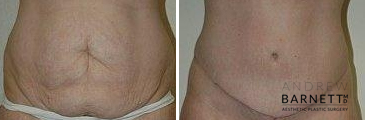
Here’s an example: When I do a tummy tuck I need to recreate the belly button (called the umbilicus). The lower tummy skin is usually excessive and wrinkled.  The upper tummy skin is smoother. In a tummy tuck, I remove the excess lower abdominal skin and fat, lift the upper abdominal skin and fat, and advance it down to close the opening created by removing the lower skin.   When I do that, I preserve the belly button but have to create an opening in the upper abdominal skin to allow the belly button to show through.  That step is called the umbilicoplasty. And – drum roll please – there are about 6 different ways to create an opening.

I’ve tried them all – and they all work.  I have one technique that I like the best, for the average patient, but I keep all the techniques in my “toolbox” and use the one for each patient that I think is best for that patient. The results are slightly different for each technique.

Who Knows Best?

Walnut Creek Plastic SurgeryIn a recent article in the Plastic Surgery Journal (where many of my techniques have been published), plastic surgeons from Harvard and LSU sent a questionnaire to 14 plastic surgeons (11 men, 3 women), showing photographs of results using three different umbilicoplasty techniques and asked them to rate the results. They also sent the questionnaire out to 500 regular folks (non-surgeons). Here’s the interesting result: the plastic surgeons were evenly split amongst the various techniques but the non-surgeons (the “crowd”) showed a strong preference for one of the techniques. In other words, Crowd Sourcing (using the public) said if you can use one specific technique, this is the one we prefer.

Find a Doctor Who Listens to You

What does this mean? Simple – listen to your patients!  Surgeons should show patients a variety of results and let them tell select what they like best. That’s why I spend so much time in consultation with my patients BEFORE the surgery – it’s time well spent!

Which Plastic Surgery Technique is Best? - Blog

Male

Individual results may vary.

Click here to contact Dr. Andrew Barnett and set up a consultation.

Visit Us

Our goal is for you to leave our office with a memorable and enjoyable experience, which is why our welcoming and compassionate staff will do everything they can to make you feel right at home.

Call Us Text Us
ONLINE CONSULTATIONS